



Surge Group

Ethereum Is Becoming the Infrastructure Layer for Tokenized Finance


Others
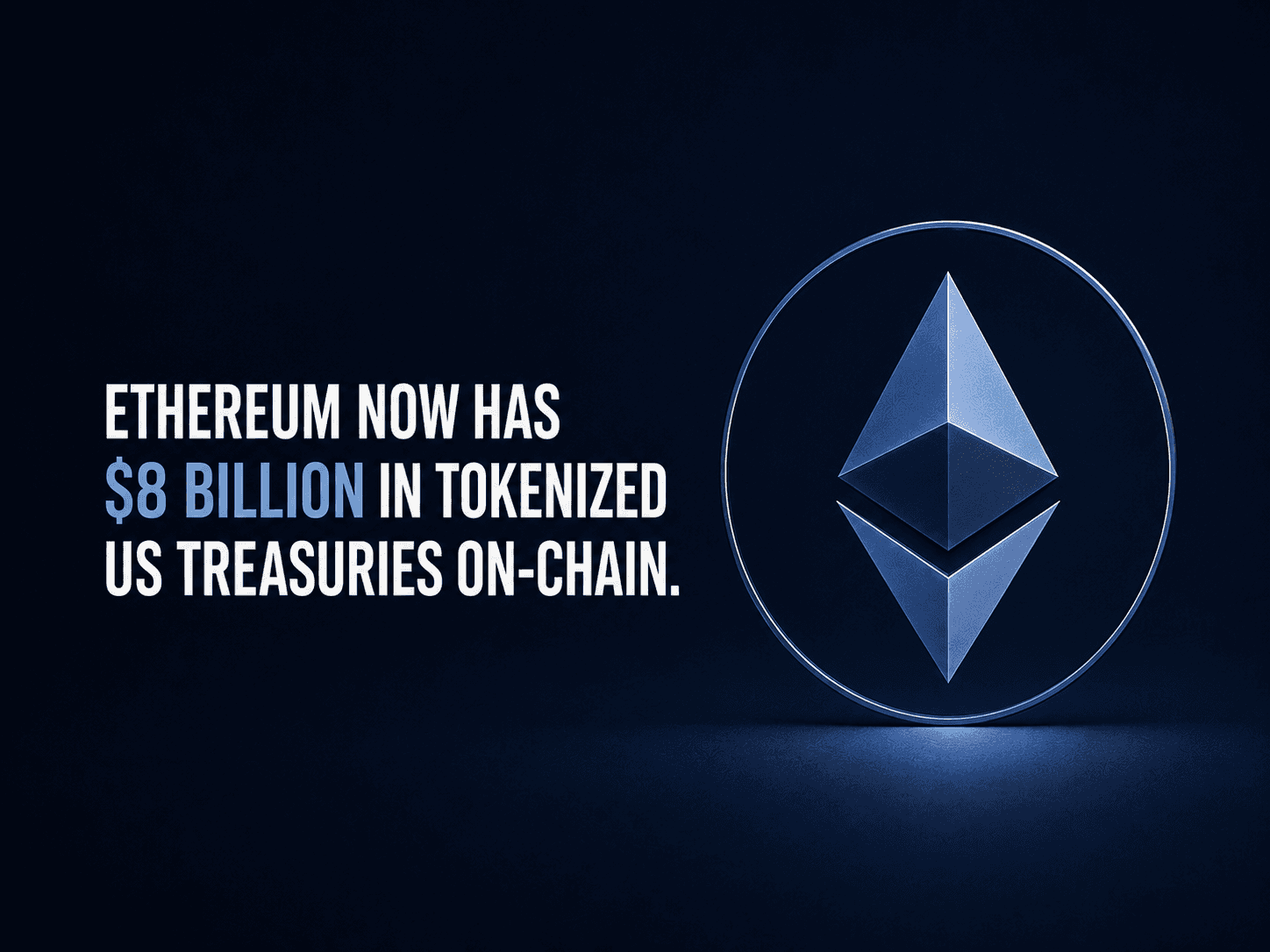
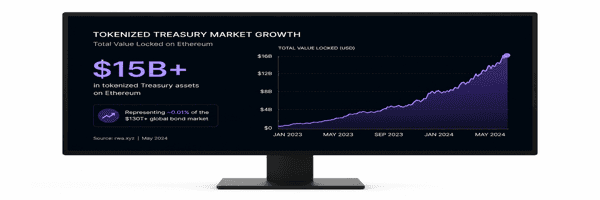
The Ethereum (ETH) is positioning itself at the center of one of the most consequential structural shifts in global finance: the tokenization of real-world assets. Tokenized US Treasuries on Ethereum have grown from under $1 billion to more than $15 billion on chain over the past 18 months. The broader tokenized real-world asset market reached $34.5 billion in May 2026, rising more than 100% year-on-year. These are not pilot programmed metrics. They are institutional deployment figures.
This development carries implications well beyond cryptocurrency markets.
For years, blockchain adoption within traditional finance was framed as exploratory, with institutions cautiously evaluating distributed ledger technology, running contained proof-of-concept programmes, or waiting for regulatory clarity before committing capital. That phase is ending. Major institutions including BlackRock, Franklin Templeton, and JPMorgan Chase have moved into active deployment environments involving tokenized assets, blockchain settlement infrastructure, and digital liquidity systems.
BlackRock recently filed for two tokenized money market funds on Ethereum, including a digital share class connected to its existing $6.1 billion fund. JPMorgan launched its MONY on-chain money market fund on Ethereum in early 2026 and has since filed for a second tokenized Treasury product. Franklin Templeton’s on-chain money market infrastructure also operates on Ethereum. These are not exploratory positions. They are product launches from some of the largest financial institutions in the world.
The significance of tokenized Treasuries lies in what they represent operationally. US government debt functions as one of the foundational collateral layers underpinning the global financial system. Moving these instruments onto blockchain infrastructure introduces efficiencies that legacy financial architecture has structurally struggled to deliver.
Settlement compresses from multi-day processing cycles toward near-instant execution. Financial products become accessible continuously rather than operating within traditional market hours. Yield distribution and reinvestment processes become automated through programmable smart contract systems. Ownership structures become fractionalized, lowering access thresholds for investors and institutions alike. Most importantly, tokenized assets become interoperable within broader digital financial ecosystems in ways traditional infrastructure was never originally designed to support.
The concept of composability is becoming increasingly central to institutional discussions surrounding tokenized finance. In traditional financial systems, assets exist within isolated infrastructure environments requiring multiple intermediaries, reconciliation layers, clearing systems, and operational dependencies before they can interact across markets.
A bond held within one custodian infrastructure cannot natively interact with a lending facility, collateral platform, or trading venue without operational intervention across several stages of the transaction lifecycle. Blockchain infrastructure changes that architecture fundamentally.
A tokenized Treasury held on Ethereum can simultaneously function as a yield-generating instrument, collateral within lending markets, liquidity infrastructure, and a component of programmable financial applications. This creates a level of operational flexibility that legacy systems were not originally designed to support.
BlackRock’s BUIDL fund and Janus Henderson’s tokenized funds recently gained access to Basin, a $1 billion instant-redemption facility enabling immediate stablecoin liquidity against tokenized Treasury positions. That is composability operating in production rather than theory.
The scale of the addressable market makes current tokenization figures appear relatively small. The global bond market exceeds $130 trillion in value. Tokenized Treasury activity at approximately $15 billion still represents only a fraction of the broader market opportunity. Yet the pace of growth, combined with the institutional participants involved, suggests blockchain infrastructure is increasingly being viewed as an operational layer capable of modernizing settlement systems, collateral mobility, liquidity management, and asset servicing functions.
This transition is unfolding alongside increasing pressure on financial institutions to modernize ageing infrastructure while managing rising compliance costs, operational complexity, and capital efficiency constraints.
Tokenization offers advantages extending beyond settlement speed alone. Reduced operational friction, programmable compliance systems, transparent ownership structures, automated reporting capabilities, and improved collateral mobility are becoming increasingly attractive to asset managers, custodians, exchanges, treasury operators, and institutional trading firms.
Ethereum’s position within this transition is also significant. Despite growing competition from alternative blockchain ecosystems, ETH continues to anchor the market in liquidity depth, developer activity, stablecoin infrastructure, DeFi integration, and institutional tooling maturity.
BlackRock, JPMorgan, and Franklin Templeton did not build these systems on alternative chains. Network effects at institutional scale are difficult to replicate, and the concentration of tokenized Treasury infrastructure on Ethereum reinforces that positioning with every additional product launch.

The rise of tokenized real-world assets is beginning to reshape financial services employment, infrastructure development, and institutional strategy in ways extending well beyond the digital asset sector itself.
The firms currently building custody systems, compliance frameworks, tokenization rails, settlement infrastructure, and institutional grade blockchain architecture are not simply building crypto companies. They are building what may ultimately become the next generation of clearing houses, custodians, and exchange operators within modern financial markets.
The distinction matters because it changes who competes for these roles, what expertise becomes valuable, and which jurisdictions emerge as infrastructure hubs for the next phase of financial market development.
For professionals across fixed income, capital markets, asset management, treasury operations, compliance, and institutional banking, the convergence of blockchain infrastructure and traditional finance is no longer a future scenario to monitor. It is an operational reality already reshaping institutional hiring priorities.
Blockchain engineers, digital asset compliance specialists, tokenization product managers, on-chain risk professionals, institutional relationship managers, and smart contract security experts are becoming increasingly important across major financial centers including Dubai, London, New York, Singapore, and Hong Kong. Demand for these skill sets is accelerating alongside institutional expansion into tokenized asset infrastructure and blockchain-based financial systems.
What makes this transition particularly significant is where it is occurring. Government debt and fixed income markets remain among the most conservative, heavily regulated, and systemically important segments of global finance. Large-scale infrastructure changes within these sectors have historically moved slowly due to regulatory oversight and operational complexity.
The rapid expansion of tokenized Treasuries, with BlackRock, JPMorgan, and Franklin Templeton leading adoption rather than observing from the sidelines, signals a broader institutional willingness to integrate blockchain infrastructure into core financial operations rather than confining it to speculative digital asset markets alone.
The tokenization of financial assets remains in its early stages relative to the size of the total addressable market. Yet the current trajectory suggests blockchain infrastructure is embedding itself into the architecture of modern capital markets faster than many traditional finance participants anticipated.
The firms building that infrastructure today are not simply participating in another crypto market cycle. They are positioning themselves within what is becoming the next operational layer of global finance, and the competitive advantage associated with early positioning is beginning to narrow.